Ceramic vs Plastic Planters
Ceramic vs plastic planters compared on weight, watering, frost, sun, stability and cost, with which pot suits balconies, hanging spots and indoor plants.
The short answer
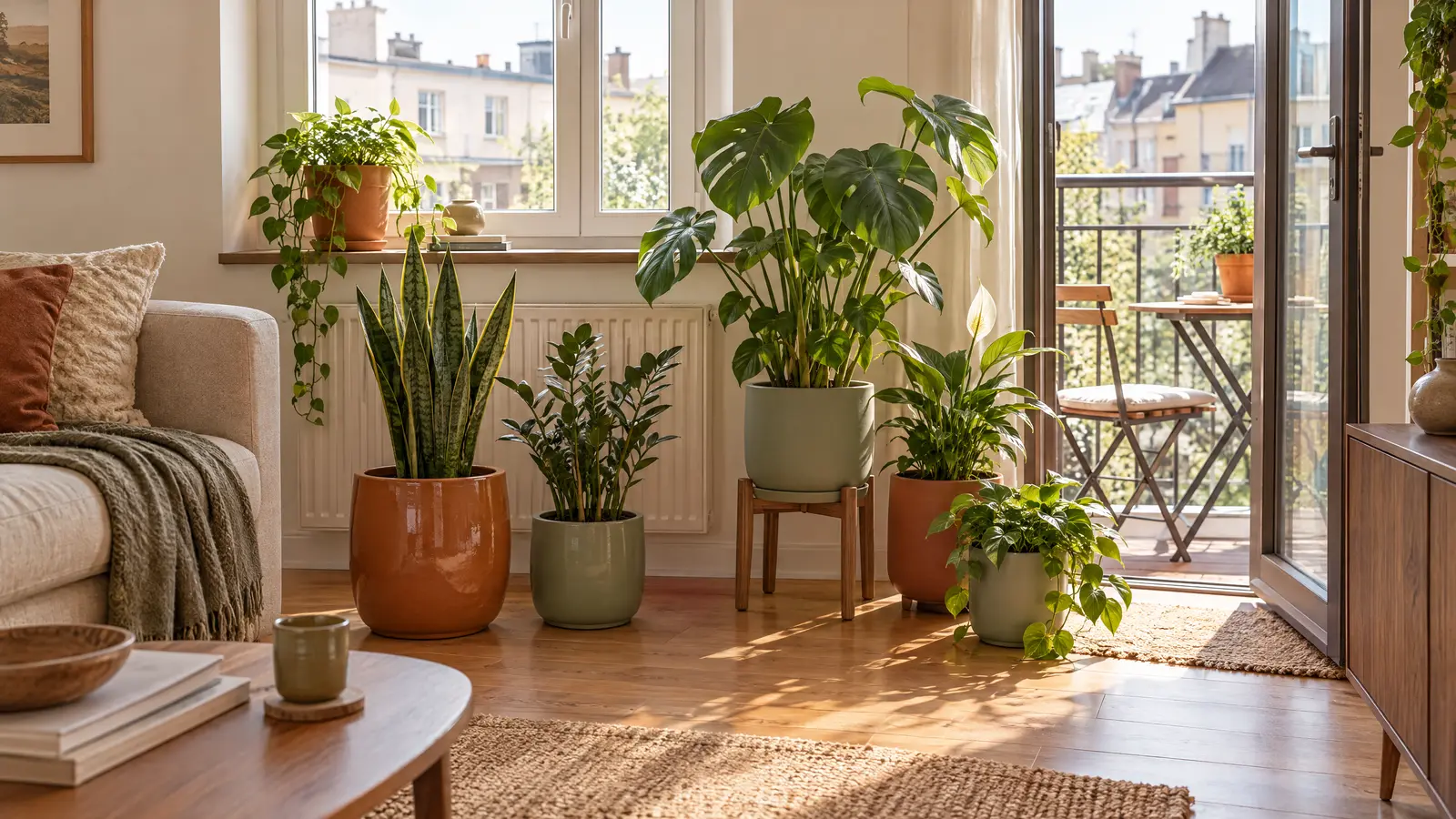
Choose ceramic planters for indoor plants on the floor or a sturdy table, for top-heavy plants that tip over, and for spots where the pot is part of the decor. Choose plastic planters for balconies with weight limits, hanging baskets, large pots you need to move, and anything that lives outside through a freezing winter. A common middle path is a plastic nursery pot sitting inside a ceramic one.
Side by side
| Ceramic planters | Plastic planters | |
|---|---|---|
| Empty weight | Heavy; a 12-inch (30 cm) pot is often 8 to 15 lb (3.5 to 7 kg) | Light; the same size is usually 1 to 2 lb (0.5 to 1 kg) |
| Filled weight | A 16-inch (41 cm) glazed pot of wet potting mix can weigh 50 lb (23 kg) or more | Roughly the weight of the soil and water alone |
| Watering | Glazed holds moisture like plastic; unglazed dries faster | Holds moisture; water less often, but watch for soggy roots |
| Heat | Thick walls buffer roots from sun and cold | Thin dark plastic heats up in full sun |
| Frost | Can crack when wet soil freezes, unless rated frost-resistant | Flexes in frost; turns brittle after years of sun |
| Stability | Resists tipping and wind | Top-heavy plants and wind can knock it over |
| Drainage | Decorative pots often have no hole | Holes are standard and easy to add |
| Cost level | Mid to high; climbs steeply with size | Low to mid |
| Lifespan | Decades if not dropped or frozen | A few years in full sun; longer in shade or indoors |
When ceramic is the better buy
Ceramic wins indoors. Its weight keeps a tall plant like a fiddle-leaf fig or snake plant from tipping, and a glazed finish turns a pot into a piece of decor. Our guide to glazed ceramic planters covers sizes and finishes for floors and tabletops.
Check the drainage. Many decorative ceramic pots have no hole, so excess water sits at the bottom and rots roots. The easy fix is to keep the plant in its plastic nursery pot, set it inside the ceramic one, and tip out any water that collects after watering. You can also drill ceramic with a diamond or tile bit, slowly and with water to keep the bit cool.
Know which ceramic you have. Glazed pots hold water much like plastic. Unglazed terracotta pulls moisture through its walls, so soil dries faster, which suits succulents, herbs like rosemary and anyone who tends to overwater.
Outdoors, ceramic is a good choice for low, wide pots on solid ground. Our guide to bowl planters covers shallow dishes for succulents and herbs, and our guide to strawberry pots and planters covers the pocketed jars that are traditionally ceramic but now come in plastic too. In freezing climates, empty ceramic pots or move them under cover for winter unless they’re sold as frost-resistant.
When plastic is the better buy
Plastic is the practical choice whenever weight or size matters. A large pot you need to move with the seasons, a planter on a balcony, or anything hanging from a hook should usually be plastic. Our guide to plastic raised planters covers the large beds where ceramic would be far too heavy to consider.
Plastic holds moisture well, so plants need water less often. That suits thirsty plants and busy people, but it also makes overwatering easy. Push a finger an inch (2.5 cm) into the soil and water only when it feels dry at that depth. Our guide to self-watering planters covers the reservoir style, which is almost always plastic.
Plastic also suits specific plants. Orchids are usually grown in clear plastic pots with extra holes, so you can see the roots and they get air; our guide to orchid pots with holes covers those. Seedlings start well in plastic cells and pots inside a mini greenhouse, where light weight and cheap replacement matter more than looks.
Pick light colors for full sun. A black plastic pot on a south-facing balcony can get hot enough to stress roots in summer; a pale pot or a ceramic one stays cooler.
In a small space
Weight is the first question on a balcony. Check your building’s rules before you fill a large pot, and keep heavy planters near the wall rather than the middle or the railing. A balcony full of wet ceramic pots adds up quickly.
Hanging planters need to be light. A hanging basket planter or a macrame hanging planter usually holds a plastic pot, because a watered ceramic pot is much heavier than it looks. Use a hook rated for the full wet weight, using the weight rating on the package, and make sure water drains away from the floor below or a neighbor’s balcony.
The same weight and weather logic applies to garden ornaments. Resin and plastic pieces are light and cheap but fade in strong sun; ceramic and stone-look pieces are heavier and can crack in frost. If you’re adding decor alongside your pots, see our guides to outdoor garden wall decor and alien yard statues. For planning a whole small outdoor space, see our balcony garden for beginners guide.
Care and lifespan
Ceramic: wipe glazed pots with a damp cloth, scrub white mineral crust off terracotta with a stiff brush and a vinegar-and-water mix, and lift pots onto feet outdoors so they drain and don’t stain decking. Bring them in or empty them before a hard freeze.
Plastic: rinse between plants, keep it out of the strongest sun if you want it to last, and replace it when it turns chalky or cracks. Plastic that has gone brittle can split when you lift a full pot, so lift from the bottom, not the rim.