Open-Shelf vs Drawer Nightstands
Open-shelf or drawer nightstand? Compare hidden storage, dust, footprint, clearance, cord management and cost to find the right fit beside a small bed.
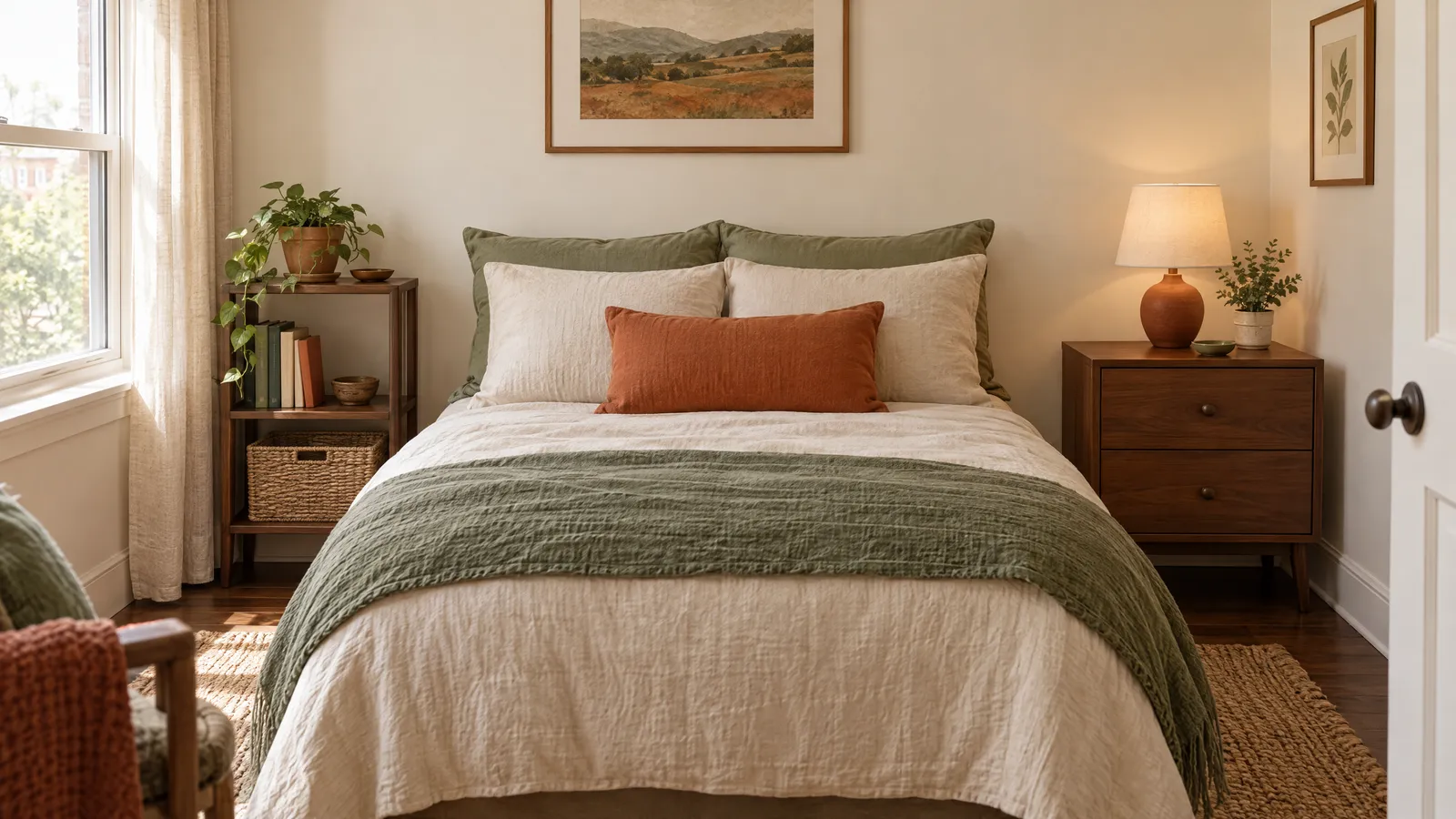
The short answer
Choose an open-shelf nightstand if your bedroom is tight, you keep only a few things by the bed, and you want the lightest look and the lowest price. Choose a drawer nightstand if you want to hide chargers, medicine, glasses and the general bedside pile, and you have room in front of it for a drawer to open. If you can’t decide, a nightstand with one drawer above an open shelf covers most needs.
Side by side
| Open-shelf nightstand | Drawer nightstand | |
|---|---|---|
| Hidden storage | None; everything is on view | Yes; one to three drawers |
| Typical height | About 22 to 28 inches (56 to 71 cm) | About 22 to 28 inches |
| Typical width | Often 12 to 18 inches (30 to 46 cm) | Often 16 to 24 inches (41 to 61 cm) |
| Front clearance needed | None beyond your walkway | Room for the drawer to pull out, roughly its depth |
| Dust | Collects on shelves and contents | Drawer contents stay clean |
| Look | Light and open; easy to see through | More solid; heavier visual weight |
| Cords and charging | Easy to run cords behind | Needs a cut-out, a back gap or built-in outlets |
| Cost level | Usually cheaper | Usually more, since drawer slides add cost |
| Assembly | Quick | Longer; drawers need lining up |
When an open-shelf nightstand is the better buy
An open shelf is the better buy when floor space is the problem. Open designs tend to be narrower and lighter, and because you can see through them, they make a crowded wall look less packed. That helps when the bed sits close to a window, a radiator or a door.
It also suits a short bedside routine. If you keep a lamp, a book and a phone, an open shelf gives you a spot for each without anything to open. A basket on the lower shelf adds hidden storage for a few small items without the cost of drawers.
Cords are easier, too. You can run a lamp and a phone charger straight down the back to the outlet. Our guide to Nordic nightstands covers the slim, open designs that suit small rooms.
The trade-off is that everything stays on view. Open shelves collect dust, and a messy shelf shows from the doorway.
When a drawer nightstand is the better buy
Drawers are the better buy if you keep more than a handful of things by the bed. Medication, earplugs, hand cream, chargers and a notebook can all go out of sight, so the top stays clear for a lamp and a glass of water.
Drawers also suit shared bedrooms and studios. When the bed is visible from the living area, hiding the bedside clutter keeps the whole room calmer. Our guide to rustic modern nightstands covers wood and drawer styles with that more solid look.
If chargers are the main clutter, a nightstand with built-in outlets solves it without a power strip on the floor. See our guides to nightstands with charging stations and LED nightstands with charging stations. Plug the nightstand straight into a wall outlet rather than an extension cord, look for a certification mark from a recognized testing lab on the built-in outlets, and pick LED lights with an off switch or dimmer so they don’t keep you up.
The middle ground
You don’t have to pick one or the other. The most common design is a single drawer on top with an open shelf below. The drawer hides the small things, and the shelf holds books or a basket. In a small bedroom, that combination usually works better than two or three drawers, which make the nightstand heavier and wider.
Your two sides of the bed don’t have to match, either. If one side of the bed is against a wall or close to a door, a slim open shelf can go there while a drawer nightstand goes on the roomier side. Matching the height and wood tone keeps a mismatched pair looking planned.
In a small space
Measure the gap first. A common rule of thumb is to leave at least 24 inches (61 cm) of walkway beside the bed, and more is more comfortable. Subtract that from the space between the mattress and the wall to get your maximum nightstand width.
Then check height. A nightstand top level with the top of the mattress, or within a few inches of it, is easiest to reach from bed. Most mattresses sit about 20 to 25 inches off the floor on a standard frame, so measure yours before you buy.
For drawers, check the front. If the drawer can’t open fully because the bed frame or a wall is in the way, the storage is wasted. Wall-mounted or floating nightstands save floor space, but in a rental, confirm you can drill and use anchors rated for the load. Our rental bedroom guide covers no-drill alternatives.
Care and lifespan
Open shelves need regular dusting; a quick wipe every week keeps them looking tidy. Drawers need a little more attention: tighten handle screws when they loosen, and don’t overload a drawer, since sagging bottoms and worn slides are the usual first failures.
Solid wood and well-built engineered wood both last for years if you keep them dry. Use a coaster under water glasses to avoid rings, and keep the nightstand a little away from radiators and heating vents.
Keep heavy items low and close drawers when you’re done. If the nightstand comes with anti-tip hardware, use it, especially in a home with small children.