Linen vs Velvet Pillow Covers
Linen or velvet pillow covers? Compare feel, warmth, wrinkles, pet hair, washing and seasonal swaps, plus the sizes and inserts that look right on a sofa.
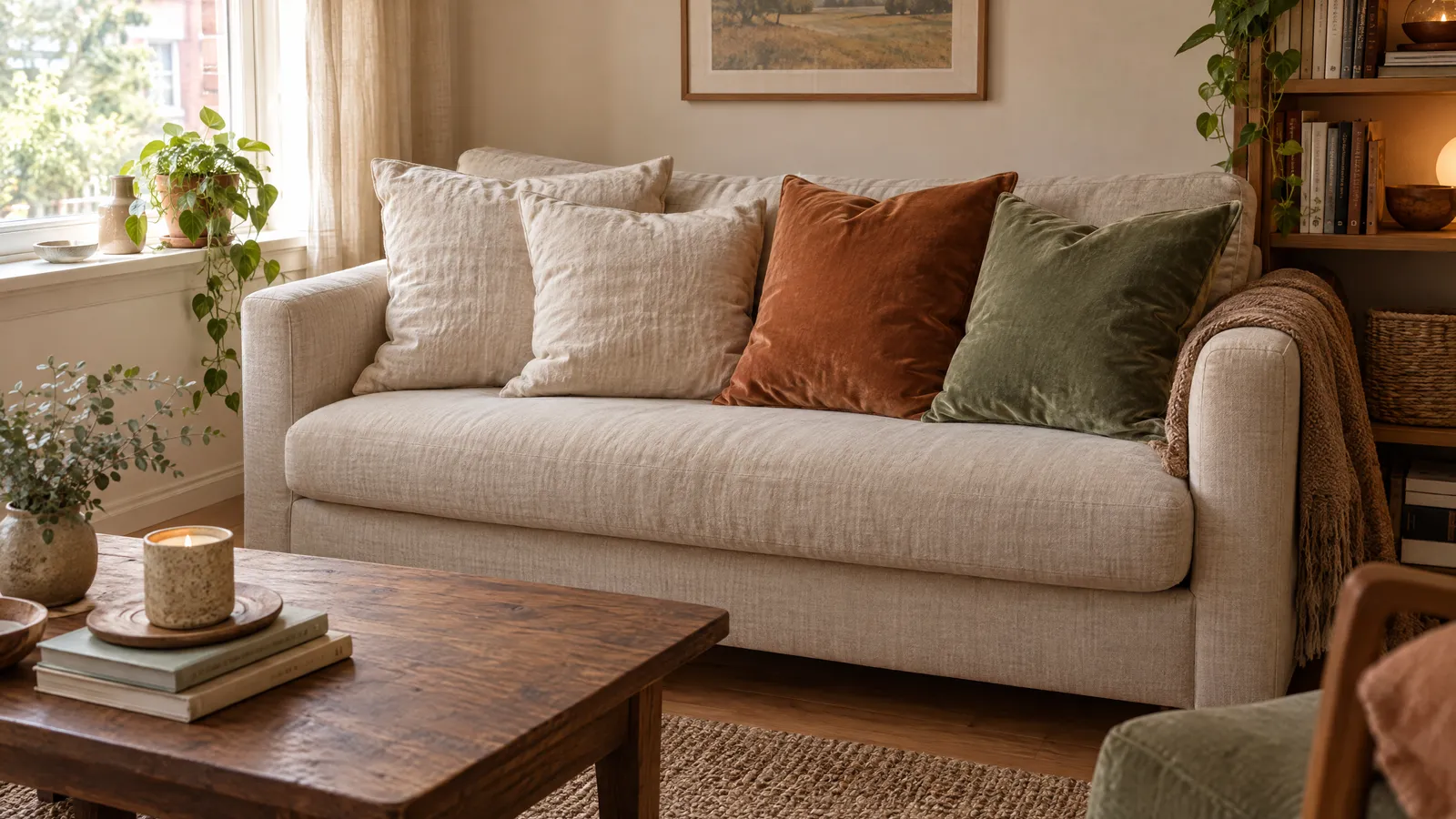
The short answer
Choose linen pillow covers if you want a relaxed, breathable look for spring and summer, covers that soften with every wash, and you don’t mind wrinkles. Choose velvet if you want rich color and a plush, warm feel for fall and winter, and you’re fine with a fabric that grabs lint and pet hair. Covers are cheap to swap, so many people keep one set of each and change them with the seasons.
Side by side
| Linen covers | Velvet covers | |
|---|---|---|
| Fiber | Flax linen, or cotton-linen and polyester linen-look blends | Polyester velvet most often; also cotton velvet |
| Feel | Dry, textured, cool | Soft, plush, warm |
| Look | Matte, casual, natural wrinkles | Sheen that shifts with light; deep color |
| Best season | Spring and summer | Fall and winter |
| Pet hair | Releases fairly easily | Clings to the pile; lint roller needed |
| Claws and snags | Looser weaves can snag | Dense pile has no loops to catch |
| Washing | Usually machine washable, cold and gentle | Polyester often machine washable; cotton velvet may need gentler care |
| Common sizes | 18 x 18, 20 x 20, 12 x 20 inch lumbar | Same |
| Cost level | Blends cheap; pure linen costs more | Polyester cheap; cotton velvet costs more |
When linen is the better buy
Linen suits warm rooms and warm months. The fabric breathes, stays cool to the touch and doesn’t feel heavy when you lean into it on a hot evening.
It also forgives a busy household. Linen gets softer with washing, and its natural wrinkles mean a slightly rumpled cover still looks intended. Natural tones such as oat, sand and sage work with almost any sofa.
Check the label, because “linen” in a product title often means a blend or a polyester linen-look weave. Blends wrinkle less and cost less; pure linen feels crisper and costs more. Our guide to throw pillow covers explains fabric labels, closures and sizing.
When velvet is the better buy
Velvet is the better buy for color and coziness. The pile holds dye deeply, so terracotta, rust, olive and deep green look richer in velvet than in a flat weave. On a plain sofa, two velvet covers add a lot of warmth for little money.
It also stands up to cats better than you might expect. Velvet has a dense, short pile with no loose loops, so claws are less likely to pull threads than on a loose weave or chunky knit. The trade-off is hair: pet hair and lint cling to velvet, so keep a lint roller nearby.
Velvet marks easily. Pressure crushes the pile and leaves shiny patches, and dark colors show dust. A quick steam usually lifts crushed pile.
Seasonal swaps
Covers are the cheapest way to change how a room feels. Keep the same inserts all year and swap linen for velvet in the fall, then back again in spring. Folded covers take almost no space, so a full set fits in a shoebox-size bin.
Holiday covers work the same way. A pair from our guide to Halloween pillow covers goes on in October and back into the bin in November. For a pattern that works year-round, our guide to boho pillow covers covers textured and woven styles that mix with both linen and velvet.
Getting the size right
Measure the cover, then buy an insert a little larger. A common rule of thumb is an insert about 2 inches (5 cm) bigger than the cover, such as a 20-inch insert in an 18-inch cover, so the corners fill out and the pillow looks full. Down-alternative and feather inserts squash to fit better than stiff fiberfill.
Check the closure, too. A hidden zipper gives the cleanest look and keeps the insert in place, and it’s the usual choice for velvet. An envelope back has no hardware to break and makes swapping covers quicker, which suits linen and seasonal covers you change often.
On a small sofa, two 18 x 18 inch pillows and one 12 x 20 inch lumbar are usually enough. Larger 22-inch pillows take up seat depth on a compact sofa, which makes it less comfortable to sit back.
In a small space
In a small living room, pillows do a lot of the decorating, so pick the fabric that fits the room’s light and use. Linen’s matte finish keeps a bright, sunny room calm. Velvet’s sheen catches lamplight in the evening and makes a dim room feel warmer.
Mixing both works well. One velvet pair and one linen pair in related colors adds texture without adding more things. For more ways to layer soft textiles, see how to make your home feel cozy.
Care and lifespan
Wash linen covers inside out in cold water on a gentle cycle, then line dry or tumble on low. Hot water and high heat can shrink linen, which matters for a cover sized to an insert. Iron while slightly damp if you want a crisp look.
Wash polyester velvet inside out on a cold, gentle cycle if the label allows, and air dry. Skip the iron; steam from a distance instead. Cotton velvet is often spot clean only, so check the tag first. Keep both out of strong direct sun, which fades dye over time.