Kids' Room Ideas for Small Spaces
Plan a small kids' room that grows with them: anchored furniture, a soft play floor, washable twin bedding, toy storage they can reach and a place for art.
The problem
A kids’ room is usually the smallest bedroom in the home, often 9 by 10 or 10 by 10 feet (about 3 x 3 m). A twin bed is 38 by 75 inches (97 x 191 cm), and a full-size crib takes up about 30 by 54 inches (76 x 137 cm) of floor. Add a dresser and the open play area can shrink to 4 by 5 feet (1.2 x 1.5 m) or less.
The room also changes faster than any other. In a few years it goes from a crawling baby, to a toddler who climbs everything, to a school-age kid with homework, and the furniture has to keep up. Toddlers use drawers and shelves as ladders, so a dresser or bookcase that isn’t anchored to the wall can tip over onto a child. That is the first thing to fix in this room, before any decor.
Then there’s the mess. Toys arrive in hundreds of small pieces, kids’ bedding needs washing far more often than yours, and walls collect artwork. In a rental you also have to plan for move-out day, so anchors and hooks need to come out cleanly or leave holes that are easy to patch.
The plan
-
Anchor every tall or heavy piece first. Strap dressers, bookcases, shelving units and the TV to the wall with anti-tip kits, into studs where you can. Many furniture makers include the hardware; if yours didn’t, buy a kit rated for the piece. In a rental, tell your landlord you’re anchoring furniture for a child’s safety, since a couple of small screw holes are easy to patch later. Keep climbable furniture away from windows, and choose cordless blinds or keep cords tied up well out of reach.
-
Plan the floor around the bed. Once the bed and dresser are in, measure the clear floor, and keep a 24-inch (61 cm) path from the door to the bed so you can get there in the dark. For babies and crawlers, a crawling play mat gives a cushioned, wipeable area; foam mats are typically about 0.4 to 0.8 inch (1 to 2 cm) thick. Follow the maker’s age guidance, check edges and pieces for anything small enough to bite off, and stay with your baby while they play on it.
-
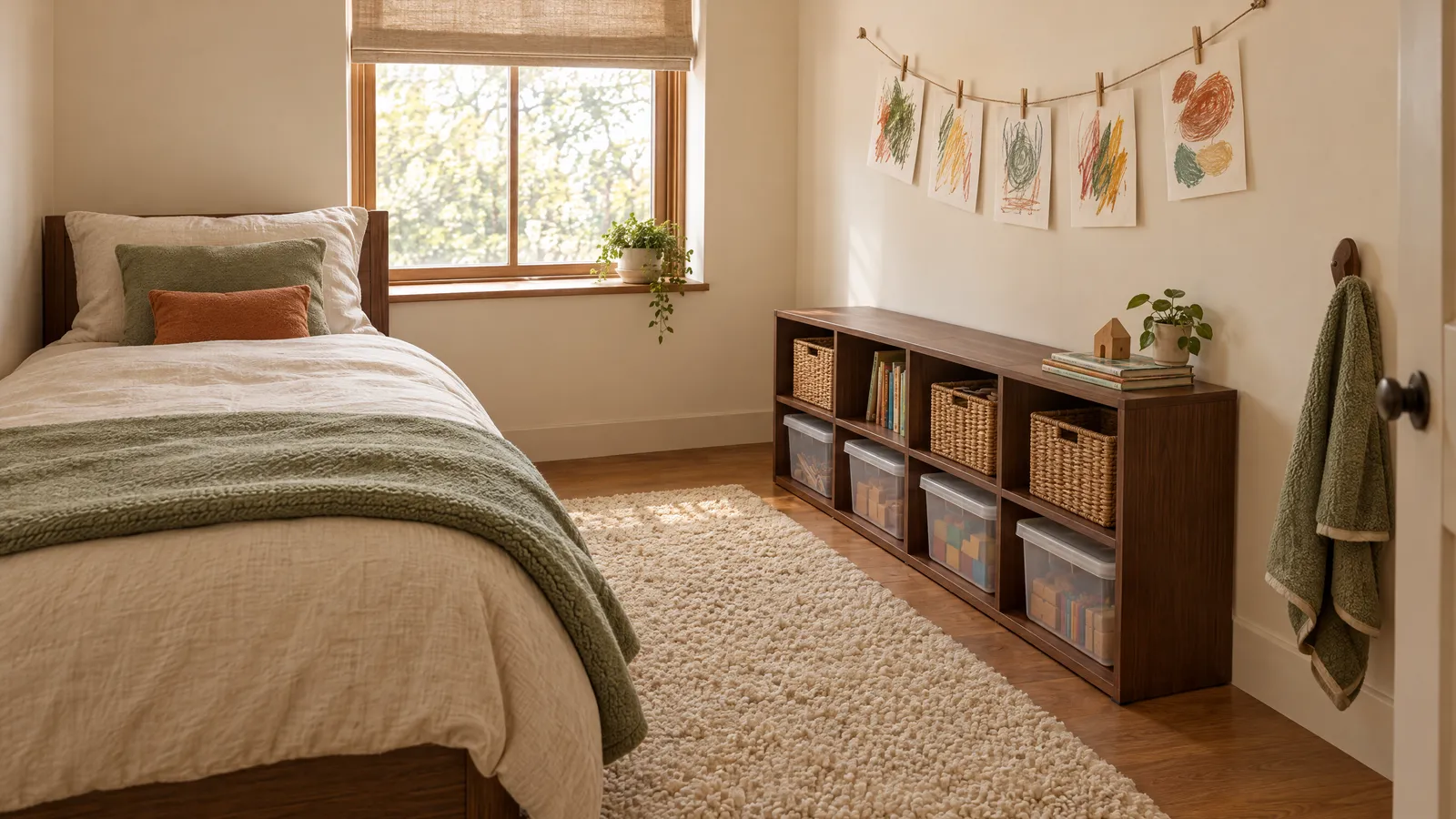
Add a soft rug where feet land. For older kids, a thick plush rug beside the bed gives a soft landing in the morning and a warm spot to play. Put a non-slip pad under it on hard floors, since kids run and slide. Deep pile is softer but holds crumbs and glitter, so weigh comfort against how often you’ll be cleaning it.
-
Set up the bed for the child’s age. For babies, follow safe-sleep guidance: a firm, flat crib mattress with a fitted sheet and nothing else in the crib, so no blankets, pillows or bumpers. Soft bedding is for older kids; follow the product’s age guidance and your pediatrician’s advice on when to start. Once they’re in a twin bed, washable duvet cover sets make changing the bed quick, and a light fleece blanket adds warmth without weight. If you’re considering a bunk or loft bed to free up floor, safety guidance says children under 6 shouldn’t sleep on the top bunk, and it needs guardrails on both sides.
-
Store toys low, in boxes they can lift. Kids can only put away what they can reach and carry. Put everyday toys on low shelves or in open bins on the floor, and use lidded plastic organizer boxes for small parts like building bricks, art supplies and puzzle pieces. A picture label on each box helps kids who can’t read yet. If there’s a child under 3 in the home, keep small-part toys up high, since they’re a choking hazard, and skip heavy hinged toy-chest lids that can drop on fingers or heads.
-
Put hooks at their height. A towel hook and a coat hook about 36 to 40 inches (91 to 102 cm) from the floor let most preschoolers hang up their own things. Kids’ cartoon towels make bath time easier and show at a glance whose towel is whose. Use hooks with rounded ends, and screw them in or use adhesive hooks rated for the weight of a wet towel.
-
Give their artwork a spot that rotates. A photo string display with clips holds a row of drawings and lets kids swap them in seconds, with just two small hooks in the wall. Hang it well out of reach of babies and toddlers, because string and small clips are strangulation and choking hazards, and never above a crib or bed where it could fall. Our guide to renter-friendly wall decor covers hooks that come off cleanly.
-
Lower the closet now, raise it later. A reach-in closet rod usually sits at about 66 inches (168 cm), well out of reach for a small child. An adjustable rod or a hanging extender at about 36 to 42 inches (91 to 107 cm) puts everyday clothes where they can choose and hang them, and the top rod holds out-of-season or too-big clothes until they fit. Raise the low rod as they grow, and use the closet floor for a bin of shoes.
Before you shop
- Clear floor once the bed and dresser are in, and the path from the door to the bed.
- Bed size (crib, toddler or twin) and mattress depth, for sheets and duvet covers.
- Height and weight of each dresser and bookcase, for the right anti-tip kit.
- Where the studs are on the walls you’ll anchor to.
- Shelf height and depth, for bins your child can lift and reach.
- Closet width and current rod height, for a lower rod or extender.
- The maker’s age guidance on any play mat, bedding or toy storage.
The guides for this room
- Baby Crawling Play Mats Updating — A cushioned, wipeable floor for crawling and play.
- Thick Plush Area Rugs Updating — A soft landing beside the bed.
- Single and Twin Duvet Cover Sets Updating — Single and twin bedding that washes easily.
- Twin Fleece Blankets Updating — A warm, light blanket for kids old enough for a bed.
- Kids' Cartoon Bath Towels Updating — Fun towels make bath time easier.
- Plastic Organizer Boxes Updating — Lidded boxes keep small toys and art supplies contained.
- Photo String Displays with Clips Updating — Display their artwork and swap it often.